Propane Alarms

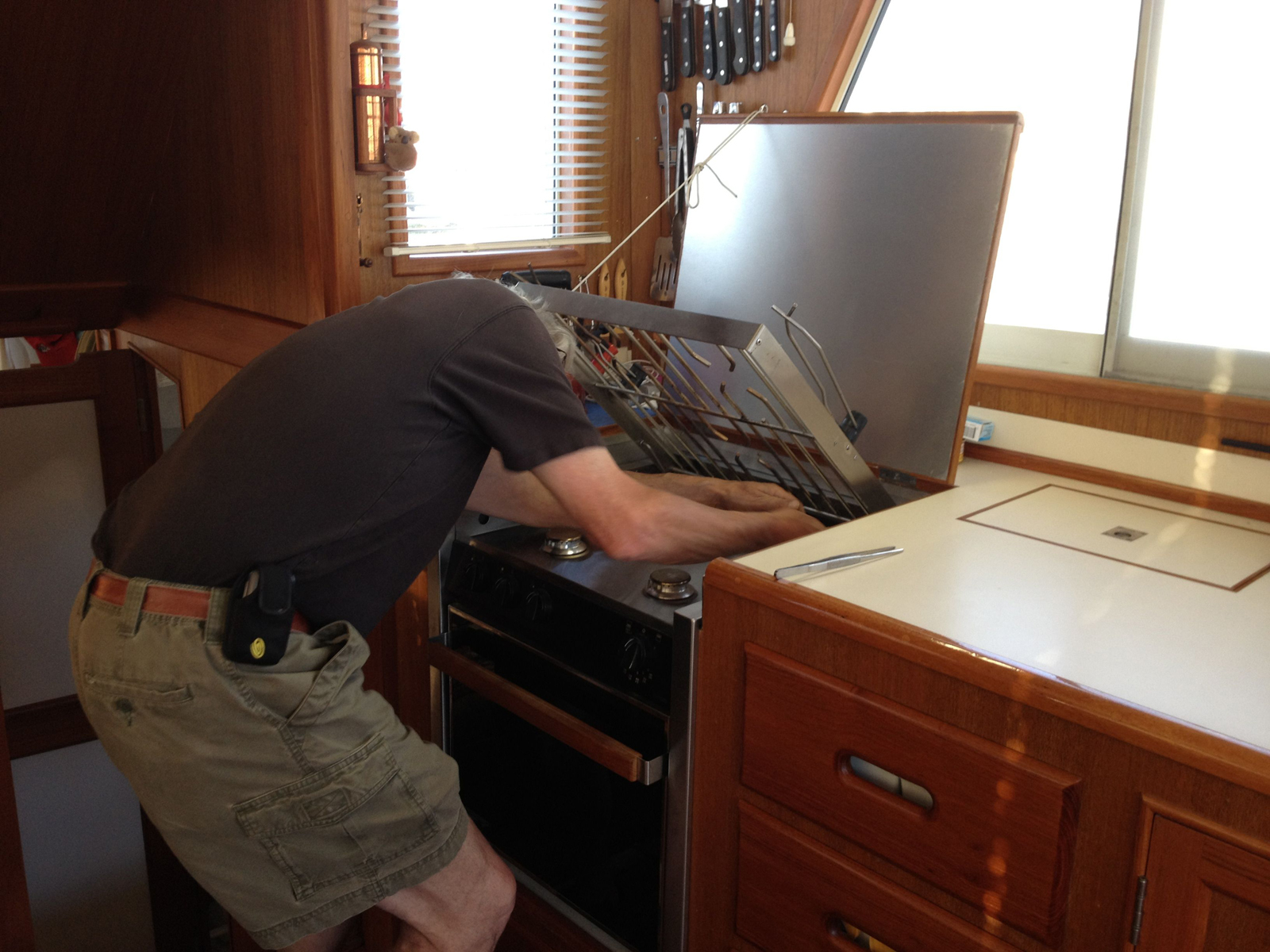
Jim detaching the stove

After our propane alarm sounded, we had to replace the sensor before we could use the stove. Jim works to detach the stove so that he can pull it out to get at the sensor.

Propane is dangerous. But it’s a great source for cooking, and like lots of other boaters, we use propane for our oven and cooktop. Propane marine installations are done carefully to prevent leaks. Since propane is heavier than air, it can settle below deck and in the bilge where it can be detonated by an engine start-up or electrical spark of any kind. So, it is important to monitor the equipment and to know about any leaks as soon as possible.

Continue reading

Still Varnishing

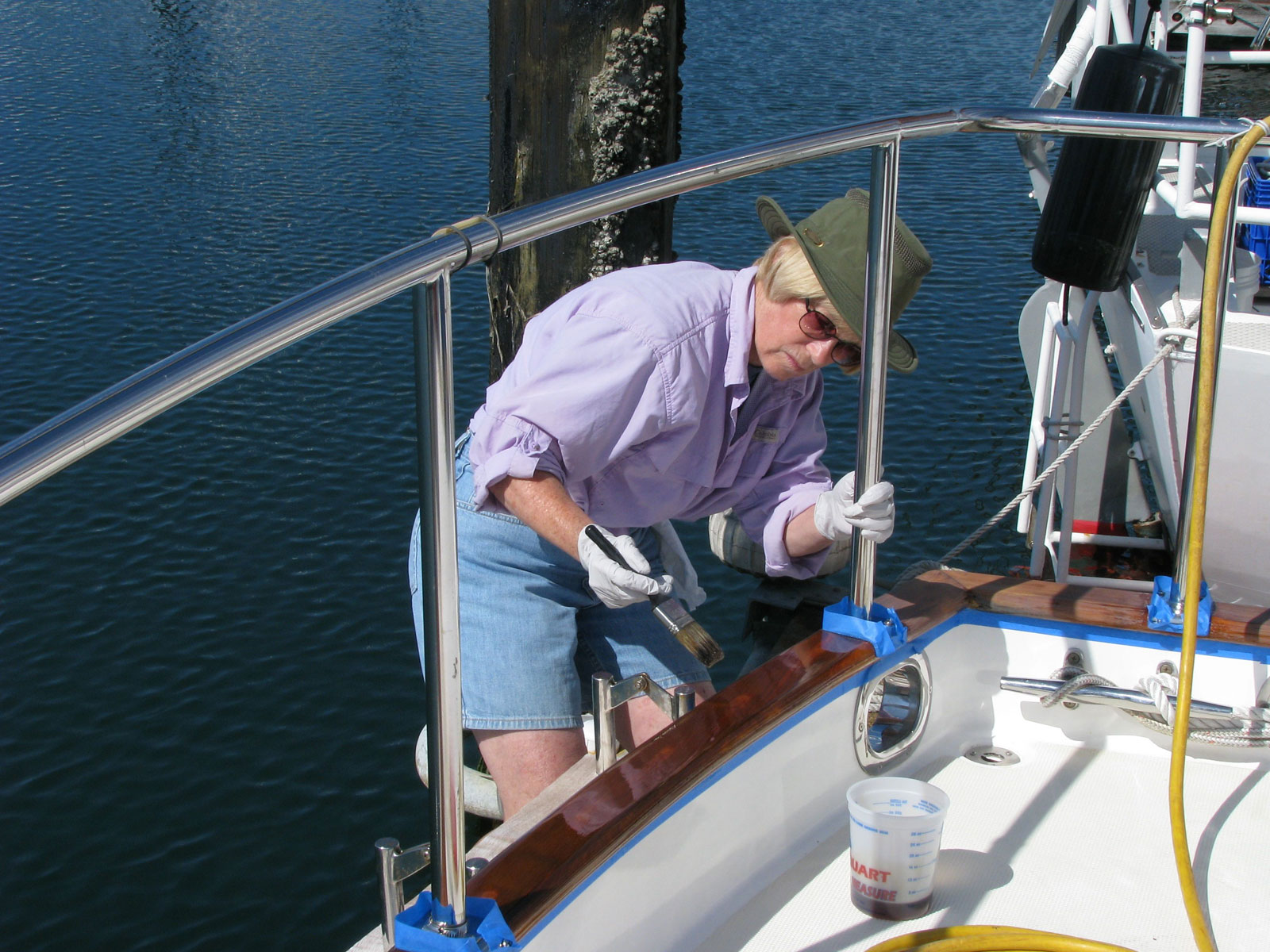
Alice varnishing stern cap rail

Alice stands on the swim step to apply a third coat of varnish to Phoenix’s stern cap rail.

Today we got a “final” coat of varnish on the aft part of the cap rail and on the eyebrow trim…despite the weather. It was dry and partly sunny when we got started this morning, but after we wiped down everything and started taping, the wind started to increase. We debated whether to go ahead, as the wind tends to blow all sorts of dust and dirt around…which ends up in the wet varnish and ruins the finish. But we wanted to get this project done, and everything was prepped and ready, so we decided to go ahead.

Continue reading

Afternoon Shadows

Image

Afternoon Shadows

The late afternoon sun casts shadows from a sailboat’s masts on Phoenix’s port side, as she sits in our slip at Anacortes Marina. We spent today sanding the teak on the aft cap rail and the eyebrow and plan to apply a third coat of varnish tomorrow, weather permitting. We taped the eyebrow trim with blue masking tape to protect the gelcoat from the sanding, and left it in place for tomorrow’s varnishing.

Varnishing

Starboard cap rail

The exterior teak requires annual varnishing to protect the wood and keep it looking nice. This is a view of the teak on Phoenix’s starboard cap rail after two new coats of varnish. The cleats and other hardware have been removed for the varnishing project, so there are visible holes where the hardware will be reinstalled.

Our recent days have been filled with the annual maintenance of exterior teak…varnishing. Our boat’s exterior teak consists only of a cap rail around the decks and an eyebrow trim piece around the flybridge. Doesn’t sound like much, but the sanding, taping, and application of the varnish takes several hours for each coat…and we try to put on three coats each season.

Continue reading

Wi-Fi Again

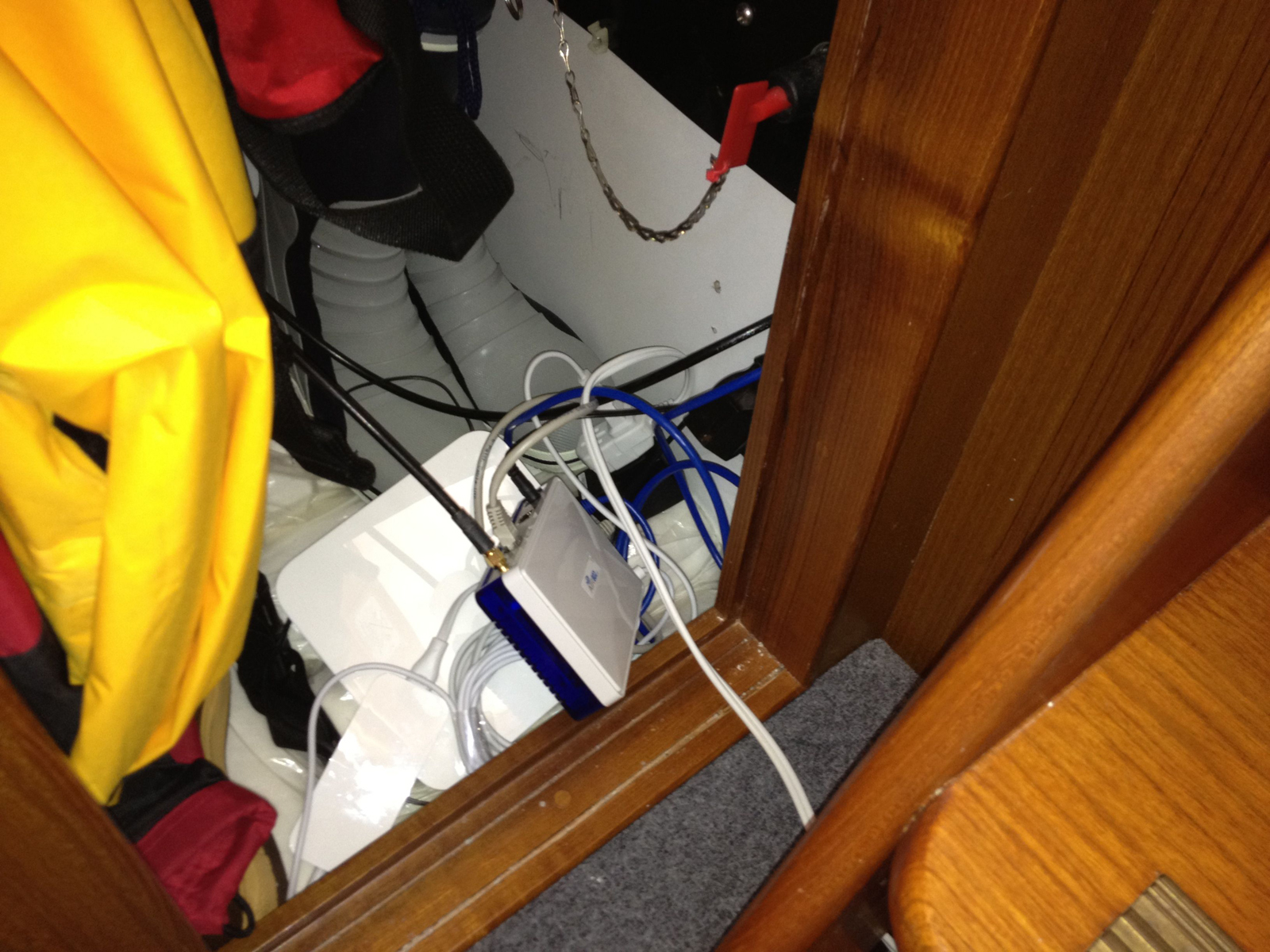
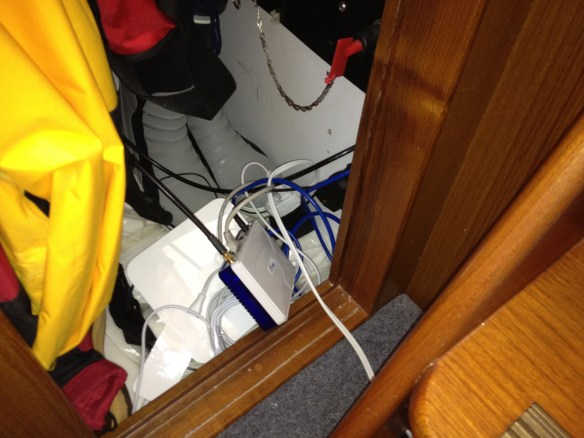
WiFi equipment in hanging locker

We decided to relocate our boat’s Wi-Fi equipment again, and put both the bridge and the router in the forward hanging locker.

We thought we had our boat system Wi-Fi working great until we came back from our week-long cruise in early July. When we reconnected everything, we experienced all kinds of problems…from slow response, to no response, to intermittent ability to connect to the Internet. Once again, we were back to the debugging stage, trying to find the source of the problems.

We contacted our Wi-Fi provider, Beacon Wi-Fi (formerly BroadbandXpress – BBX), and we learned they are replacing equipment at various places in their coverage area. Their technicians were able to reboot us a couple of times, which helped briefly, but we found that some of the problem areas were in our boat’s Internet system, as we continued to have inconsistent and slow response times.

Jim started taking out various parts of the system he set up earlier this year. He took the Apple AirPort Extreme (our router) and the AIR802 AP-G250 (our bridge) out of the area below the drawers, thinking it might be getting too hot in that small space. He also disconnected our exterior antenna (AIR802 ANMA2412 Marine Wi-Fi Antenna). Then we decided to locate the router and bridge in the forward hanging locker again, where there is more air space around the equipment, and it’s easier to see indicator lights and reboot if we need to.

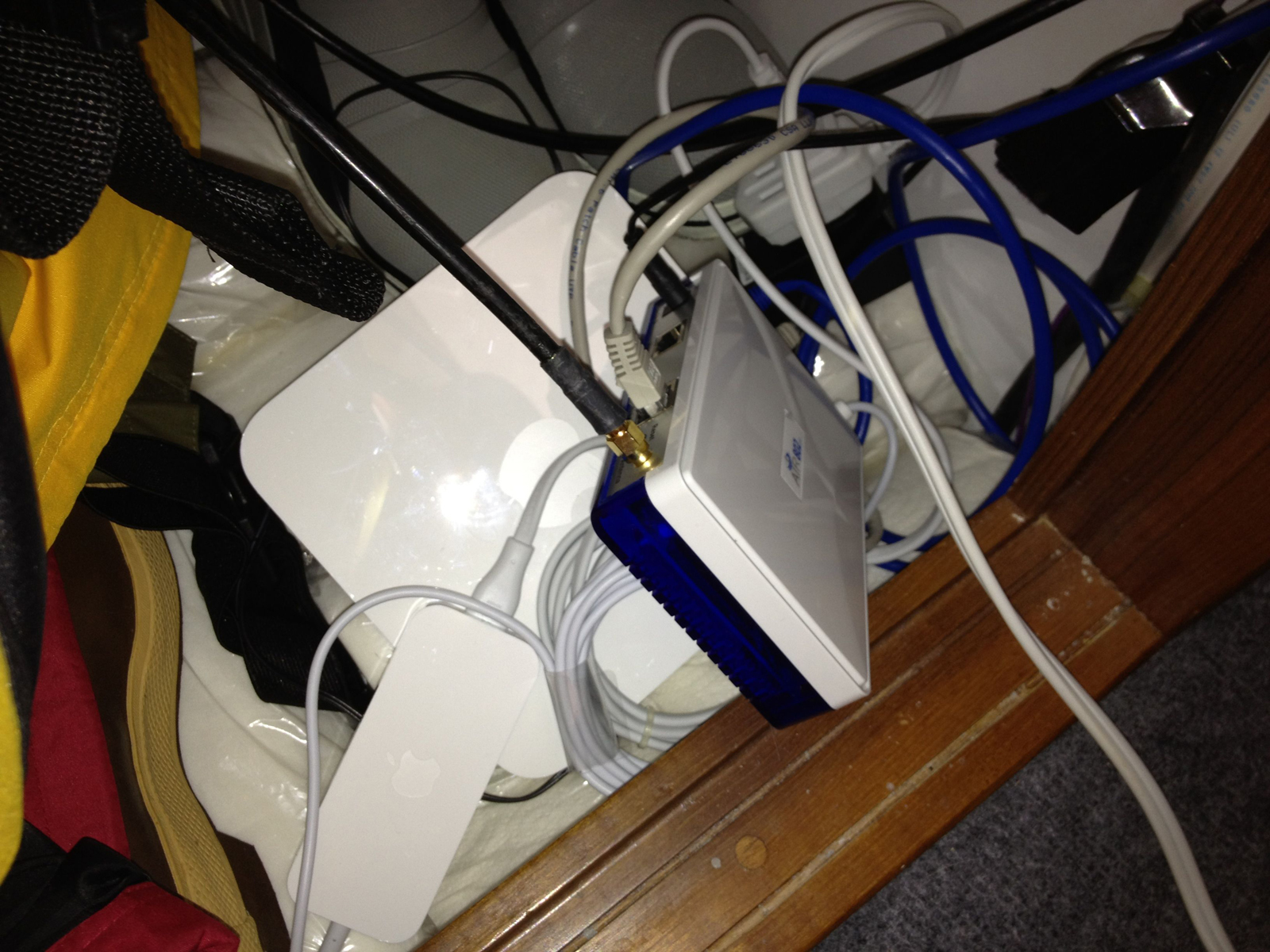
WiFi equipment in hanging locker close-up

A close-up view of the Wi-Fi equipment in the forward hanging locker…the larger white box on the bottom is the Apple AirPort Extreme, and the smaller blue-and-white box on top at the right is the AIR802 bridge.

In addition, we got a longer Ethernet cable, so some of the splices used in the previous setup could be removed. Yesterday Jim ran the cable through the engine room (so we have a “clean” installation in our main cabin), put the equipment in the hanging locker, and reconnected the system to the exterior antenna. Voila! Things seem to be working again. We still have to permanently mount the equipment, and we’re hoping that the system will remain stable after that.
Wiring and Teak

Superwinch Battery

The Superwinch battery is stored inside a locker on our flybridge, and in a protective box that is tied down.

Solenoid with battery and winch wires attached

The Superwinch solenoid now has wires on the left side that connect to the battery…the wires on the right are the ones that connect to the winch.

Swimstep and boarding ladder before.

Teak swimstep and boarding ladder before cleaning. The boarding ladder is stored in a folded position, on the port side of our stern.

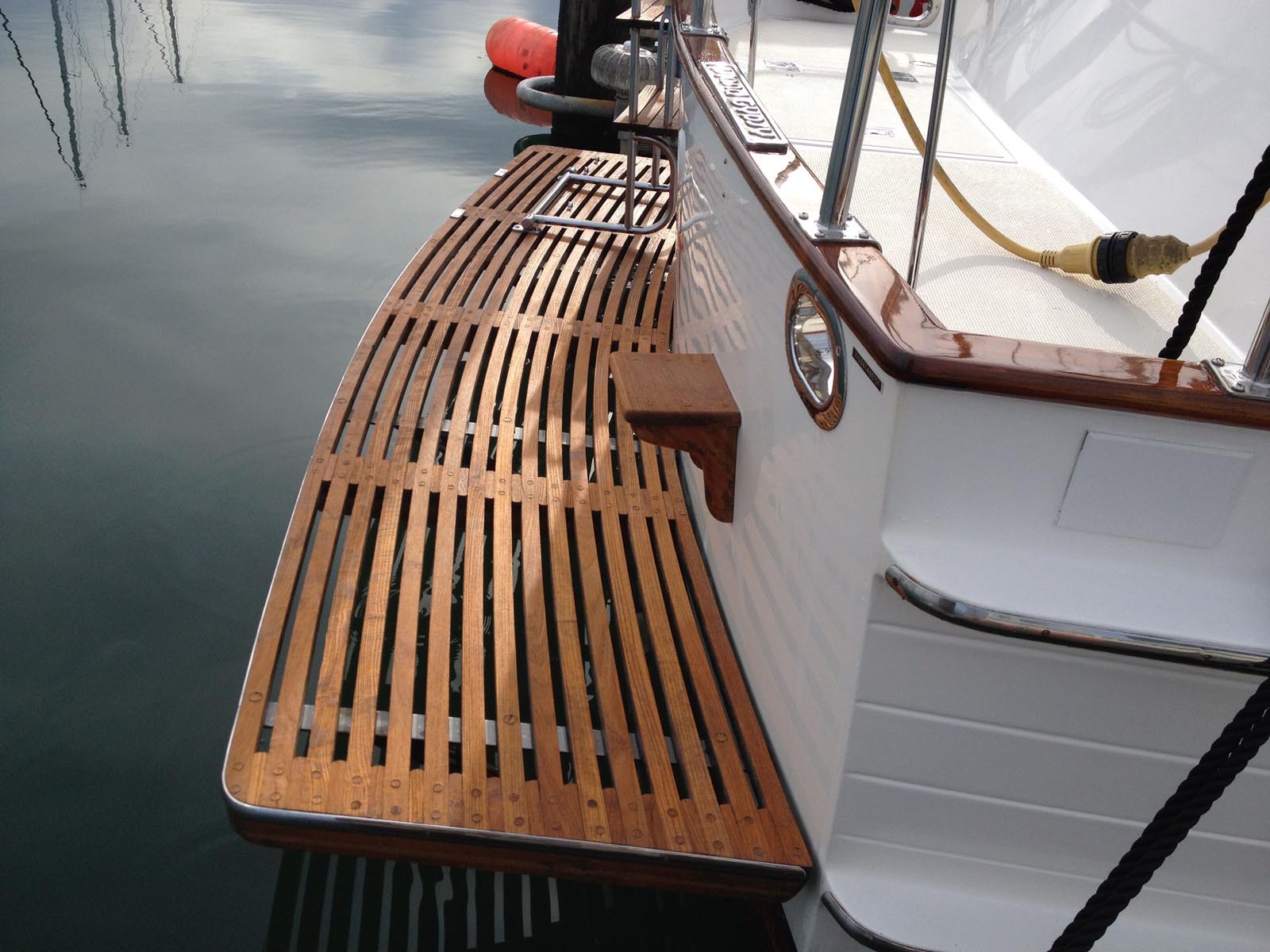
Swimstep and boarding ladder after.

Teak swimstep and boarding ladder after cleaning.

Connecting the battery and remote control to the solenoid is the next step of installing the Superwinch. We found a place to store the winch battery in the locker on the starboard forward end of the flybridge, then ran heavy battery cables inside the side wall of the flybridge to connect the battery to the solenoid.

Wiring the remote control to the solenoid required a little more effort. First we had to decide where to locate the plug-in for the remote so that the 10-foot cord will reach the places we want to be when we are using it. The best place seems to be near the base of the mast, close to where the dinghy is stored on the boat deck. However, we couldn’t find a convenient place where we could recess the plug-in connection. After many rejected ideas, we settled on buying a weather-tight electrical junction box that will be mounted near the stairs to the flybridge and painted white to match the cabin.

We had a dry day on Monday, so I was able to clean up the teak on the swim step and boarding ladder, using the same technique and product that I used on the teak decking a few days ago (see June 3 post). After some serious scrubbing, the dirty teak cleaned up pretty good and it was so nice to see the warm teak color return.